Amway Faces Continued Revenue Challenges
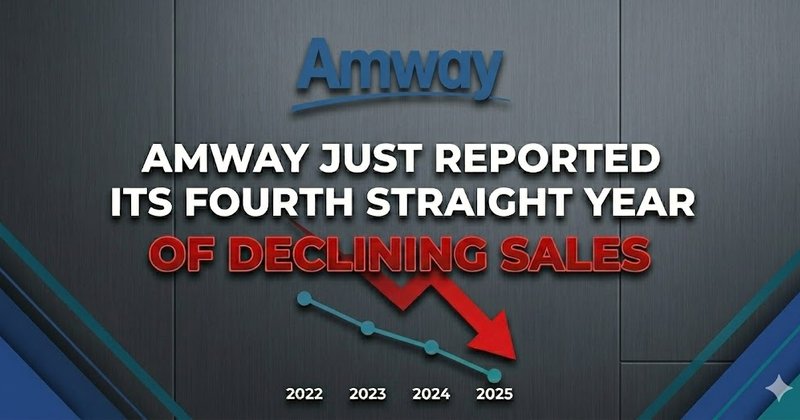
Amway has reported its global sales for 2025, revealing a drop to $7.3 billion, a decline of 1% from the previous year’s $7.4 billion. This marks the fourth consecutive year of falling sales for the world's largest direct selling firm.
A Decade of Decline
Over the past decade, Amway has experienced a significant downturn, losing more than $2 billion in annual revenue since it peaked at $9.5 billion in 2015. Here’s a quick look at the sales figures for the last four years:
- 2022: $8.1 billion
- 2023: $7.7 billion
- 2024: $7.4 billion
- 2025: $7.3 billion
This persistent decline is not just a minor fluctuation; it represents a worrying trend for the company and the overall MLM industry.
CEO's Candid Assessment
In a recent statement, Michael Nelson, President and CEO of Amway, openly acknowledged the downward trend. He stated, "Our revenue has gone down this past year. It was a modest decline again of 1%. We’re not satisfied with the trajectory of that, but we’re starting to see that change with those investments we’re making into some of the core fundamentals." This level of transparency is significant in an industry often criticized for its lack of openness.
Nelson attributed some of the decline to increased competition from new business opportunities available today, such as e-commerce, gig work, and digital entrepreneurship. This highlights a shifting landscape where traditional MLM models must adapt to retain interest and investment from potential distributors.
Positive Developments Amid Declines
Despite the overall sales drop, there are notable areas where Amway is experiencing growth. The company’s nutrition products, which account for 64% of its total sales, continue to thrive. Nutrilite, Amway's flagship brand, remains the top-selling vitamin and dietary supplement brand globally.
Geographically, Amway has seen growth in markets such as Vietnam, Taiwan, Central Asia, and Latin America, which helped to offset weaker performance in North America and China. Additionally, some recent product launches have shown promise. For instance, the Nutrilite AmCell health supplement debuted in three Asian markets with strong early results, while the Artistry LongXevity skincare collection launched in seven markets with claims of clinically proven benefits.
Strategic Investments for Future Growth
Looking ahead, Amway has made strategic investments totaling over $127 million in its headquarters in Ada, Michigan. These funds are aimed at enhancing manufacturing, quality control, and research and development. The partnership with Korean microbiome firm HEM and the development of AI recommendation tools for distributors are also crucial steps for the company as it strives to modernize its approach.
Challenges Ahead
While Amway boasts a robust global network of over one million independent business owners and operates in more than 100 countries, the ongoing revenue decline poses serious questions about its future. The company’s rich history doesn’t guarantee success, especially when facing a drop of over 20% from its peak revenue.
Critical factors for Amway will be whether it can adapt its business model, improve distributor recruitment and retention, and effectively compete in a landscape that is increasingly digital.
Why This Matters
The implications of Amway's financial struggles extend beyond just the company itself. As a leading player in the direct selling industry, its performance serves as a barometer for the health of the entire sector. If the largest direct selling company continues to report declining revenue, it raises broader concerns about the viability of the model as a whole.
While some challenges are specific to Amway, such as currency fluctuations and market saturation in key regions, the structural issues related to competition from digital platforms cannot be ignored. This landscape shift calls for a reevaluation of how MLM companies attract and engage distributors.
What to Watch For
Moving forward, industry observers should keep an eye on how Amway implements its strategic investments and whether these will translate to a turnaround in sales. Additionally, shifts in distributor recruitment strategies and product innovations will be crucial indicators of the company's ability to adapt to the changing marketplace.