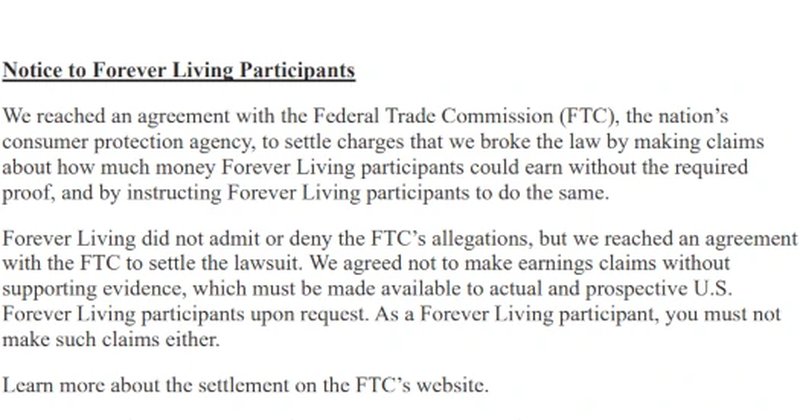
FTC Takes Action Against Forever Living Products
The Federal Trade Commission (FTC) has imposed an injunction on **Forever Living Products**, a prominent MLM company known for its aloe vera-based health products, over deceptive income claims. This action comes shortly after the company unexpectedly ceased its U.S. MLM operations, citing vague "unforeseeable restrictions."
Why This Matters to the MLM Community
Forever Living's abrupt exit from the U.S. market raises significant concerns within the MLM sector. The company’s failure to transparently communicate the reasons for shutting down operations suggests deeper issues, particularly regarding regulatory compliance and income claims. The FTC's intervention underscores the increasing scrutiny that MLM companies face, particularly regarding their advertising practices.
Allegations and Findings
According to the FTC's complaint filed in April, **Forever Living Products** has long relied on misleading earnings claims to attract new distributors, commonly referred to as FBOs (Forever Business Owners). The allegations detail a pattern of promoting unrealistic income potential through testimonials, images of extravagant lifestyles, and oversized checks purportedly showing earnings. Such tactics are not just ethically questionable; they also violate the FTC Act.
“The vast majority of consumers engaging with Forever Living Products incur expenses but earn little to no income,” stated the FTC.
Despite being aware of the ongoing investigation, Forever Living continued to make claims suggesting that recruits could achieve significant profits. These assertions included vague promises of "extra income" or "supplemental income," which, according to the FTC, mislead potential FBOs.
Pyramid Scheme Concerns
The FTC's complaint further highlights a concerning pattern reminiscent of a pyramid scheme, where FBOs are led to believe they will earn money based on the recruitment of new members rather than actual product sales. This structure often leads to financial losses for most participants, contradicting Forever Living's optimistic marketing messages.
Data revealed by the FTC indicates that in 2024, nearly 77% of U.S. FBOs received no income at all, while 15.4% earned less than $206, even before accounting for expenses. These figures paint a stark picture: the overwhelming majority of recruits are unlikely to recoup their initial investment, which typically exceeds $300.
The Long-Term Impact
This case raises important questions for both current and prospective MLM distributors. It serves as a cautionary tale about the potential risks of joining companies that promise high earnings with little substantiation. Distributors should remain vigilant and critically evaluate the income claims made by such companies.
What This Means for Consumers
Consumers considering joining **Forever Living Products** or similar MLMs should be aware of the risks involved. The FTC’s findings suggest that potential profits are often illusory, with many participants facing financial losses. This injunction serves as a reminder to approach MLM opportunities with skepticism and due diligence.
Looking Ahead
The MLM industry should brace for continued scrutiny as regulatory bodies like the FTC tighten their grip on deceptive marketing practices. Companies must adapt their business models to avoid similar pitfalls. Moving forward, it will be essential for both distributors and consumers to stay informed about the regulatory landscape and the practices of the MLM companies they engage with.
For the latest updates on regulatory actions and industry news, keep an eye on developments coming out of the FTC and other regulatory agencies.