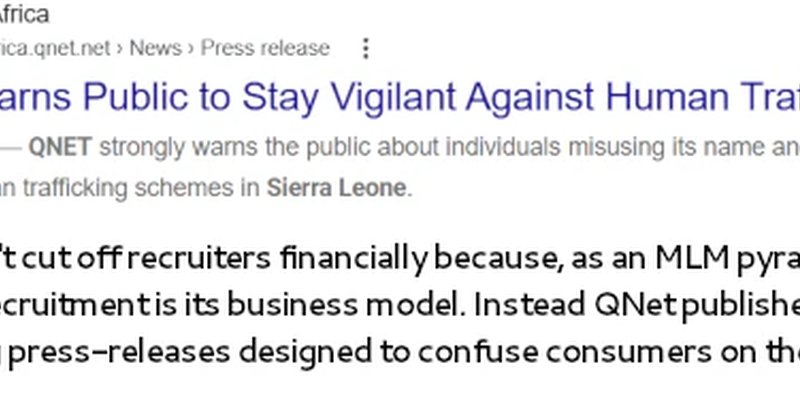
17 Victims Rescued from QNet-Linked Human Trafficking Camp in Nigeria
Seventeen individuals have been rescued from a human trafficking operation connected to **QNet** in Lagos, Nigeria. This alarming discovery was made by the Lagos State Command of the Nigeria Security and Civil Defence Corps (NSCDC) on March 13th, highlighting serious allegations against the controversial multi-level marketing (MLM) company.
Why This Matters
The NSCDC uncovered a facility in the Torikoh area of Badagry, where victims were reportedly trapped and forced into fraudulent marketing schemes. This situation underscores the concerning tactics employed by recruitment operations linked to **QNet**, which have been scrutinized for their aggressive and often deceptive methods. The case also illustrates how the MLM industry, particularly in certain regions, continues to face serious ethical and legal challenges.
The individuals were allegedly enticed with false promises of employment, only to find themselves trafficked from Togo to Nigeria. Once in captivity, they were coerced into recruiting others into the scheme. This is significant because it raises questions about the accountability of companies like **QNet**, especially as they disavow responsibility for the actions of rogue promoters.
Details of the Operation
According to officials, prospective members were required to pay a hefty registration fee of 650,000 CFA (approximately $1,100) before they could join the business. This upfront financial burden is typical in many MLM schemes, which often prey on vulnerable populations seeking better economic opportunities.
"Victims allege they were compelled to register for the Internet marketing scheme and were subsequently extorted."
Victims reported harrowing experiences including the confiscation of personal belongings like mobile phones and power banks, destruction of their SIM cards, and paltry allowances for sustenance while they sought to generate funds for their registration fee. This exploitation further exemplifies the predatory nature of some MLM practices.
Law Enforcement Action
Following the tips provided by a victim, NSCDC launched an investigation, resulting in four arrests. The suspects were reportedly caught attempting to bribe the authorities, an act that underscores the desperation of those who operate in these illicit environments. Items recovered during the operation included laptops, promotional materials bearing **QNet** branding, and other paraphernalia used to facilitate the fraud.
Historically, similar trafficking incidents associated with **QNet** have been more prevalent in Ghana, but this recent event in Nigeria indicates a troubling expansion of such activities across West Africa. In early 2025, Nigerian authorities apprehended twenty-eight individuals linked to **QNet** fraud, suggesting a growing awareness and crackdown on these operations.
Company Profile and Ongoing Concerns
Founded by **Vijay Eswaran**, **QNet** has faced numerous allegations since its inception in 1998. As of April 2026, it was reported that the **QNet** website received around 247,000 monthly visits, with significant traffic from countries like India, Thailand, and Brazil. Despite these issues, Malaysian authorities have yet to take significant action against Eswaran or the organization.
What This Means for the Industry
This incident raises critical questions about the ethical responsibilities of MLM companies, particularly in regions where regulation may be lax. Distributors and potential recruits must remain vigilant, as the allure of financial gain often hides serious risks.
For consumers, this serves as a stark reminder of the need for due diligence before engaging with MLM opportunities. Many victims are drawn in by the promise of income, only to face exploitation and extortion.
Looking Ahead
As awareness of these practices grows, stakeholders in the MLM industry should expect increased scrutiny from regulators and law enforcement. Future developments in this case could lead to further legal actions against **QNet** and a reevaluation of MLM regulations across Africa. Interested parties should keep an eye on how these issues unfold and the potential implications for consumer protection and ethical business practices.